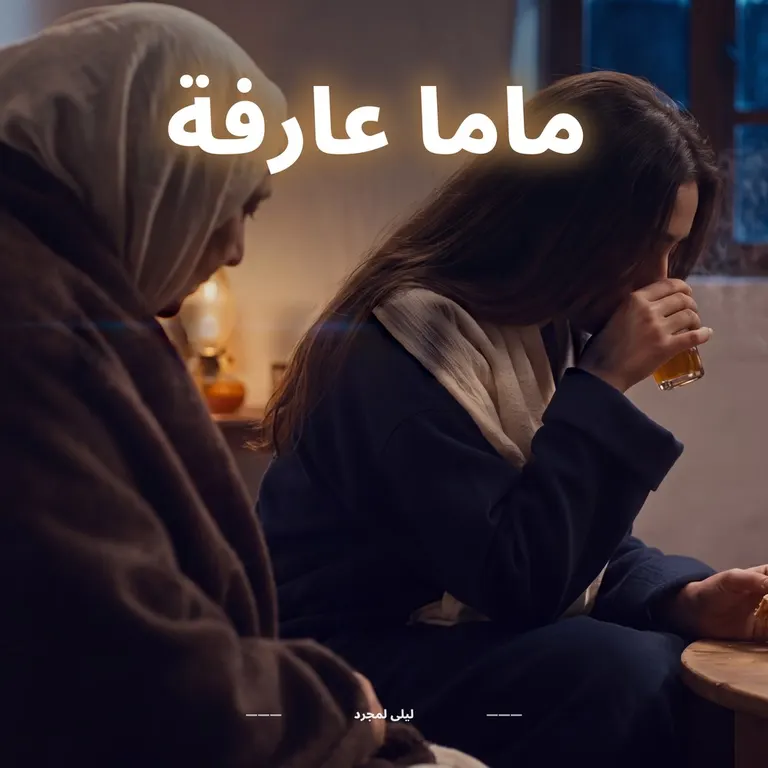
الكلمات سطر بسطر
آه... يا لالّة... يا الغالية... آه...
Ah... ya lalla... ya lghalya... ah...
Ah... ô Lalla... ô ma précieuse... ah...
Ah... oh Lalla... oh my dearest... ah...
فالطّبلة كنضحك... ونعمّر الكيسان
F ttebla kand7ek... w n3ammer lkisan
À table je ris... et je remplis les verres
At the table I laugh... and fill the glasses
ونگول: «أنا بخير»... ونغطّي فمّي بالفنجان
W ngoul: «Ana bikhir»... w nghetti fommi b lfenjan
Et je dis : « Je vais bien »... et je cache ma bouche derrière la tasse
And I say: «I’m fine»... and hide my mouth behind the cup
وماما ساكتة... غير كتشوف فيّا... وعارفة
W mama sakta... ghir katchouf fiya... w 3arfa
Et Maman se tait... elle me regarde seulement... et elle sait
And Mama is silent... she just looks at me... and she knows
كلّ ما نخبّي دمعة... كنلقاها شايفة
Koll ma nkhebbi dem3a... kanl9aha chayfa
Chaque fois que je cache une larme... je vois qu’elle l’a vue
Every time I hide a tear... I find she has seen it
گالت ليّا: «آ بنتي... اللّقمة واقفة فيدّك
Galet liya: «A benti... lle9ma wa9fa f yeddek
Elle m’a dit : « Ma fille... la bouchée reste dans ta main
She said to me: «My daughter... the bite is stuck in your hand
وعينك بعيدة... آش بيك؟»
W 3inek b3ida... ach bik?»
Et ton regard est loin... qu’est-ce que tu as ? »
And your eyes are far away... what’s wrong?»
ماما عارفة اش بيك... قبل ما تگولي اش بيك
Mama 3arfa ach bik... 9bel ma tgouli ach bik
Maman sait ce que tu as... avant que tu dises ce que tu as
Mama knows what’s wrong... before you say what’s wrong
تخبّي عليها دمعة؟... راها كتبكي عليك
Tkhebbi 3liha dem3a?... raha katbki 3lik
Tu lui caches une larme ?... elle pleure pour toi
You hide a tear from her?... she is crying for you
حضنها دوا... وصوتها رقية
7ednha dwa... w sowtha r9ya
Ses bras sont un remède... et sa voix une prière qui guérit
Her embrace is medicine... and her voice a healing prayer
ماما عارفة... ماما عارفة... آاااه
Mama 3arfa... mama 3arfa... aaaah
Maman sait... Maman sait... aaaah
Mama knows... Mama knows... aaaah
فالطّبلة كنضحك... ونعمّر الكيسان
F ttebla kand7ek... w n3ammer lkisan
À table je ris... et je remplis les verres
At the table I laugh... and fill the glasses
ونگول: «أنا بخير»... ونغطّي فمّي بالفنجان
W ngoul: «Ana bikhir»... w nghetti fommi b lfenjan
Et je dis : « Je vais bien »... et je cache ma bouche derrière la tasse
And I say: «I’m fine»... and hide my mouth behind the cup
وماما ساكتة... غير كتشوف فيّا... وعارفة
W mama sakta... ghir katchouf fiya... w 3arfa
Et Maman se tait... elle me regarde seulement... et elle sait
And Mama is silent... she just looks at me... and she knows
كلّ ما نخبّي دمعة... كنلقاها شايفة
Koll ma nkhebbi dem3a... kanl9aha chayfa
Chaque fois que je cache une larme... je vois qu’elle l’a vue
Every time I hide a tear... I find she has seen it
ماما عارفة اش بيك... قبل ما تگولي اش بيك
Mama 3arfa ach bik... 9bel ma tgouli ach bik
Maman sait ce que tu as... avant que tu dises ce que tu as
Mama knows what’s wrong... before you say what’s wrong
تخبّي عليها دمعة؟... راها كتبكي عليك
Tkhebbi 3liha dem3a?... raha katbki 3lik
Tu lui caches une larme ?... elle pleure pour toi
You hide a tear from her?... she is crying for you
حضنها دوا... وصوتها رقية
7ednha dwa... w sowtha r9ya
Ses bras sont un remède... et sa voix une prière qui guérit
Her embrace is medicine... and her voice a healing prayer
ماما عارفة... ماما عارفة... آاااه
Mama 3arfa... mama 3arfa... aaaah
Maman sait... Maman sait... aaaah
Mama knows... Mama knows... aaaah
گالت ليّا: «بكّي آ بنتي... الدّمعة عند أمّك ماشي عيب»
Galet liya: «Bekki a benti... ddem3a 3end ommek machi 3ib»
Elle m’a dit : « Pleure, ma fille... une larme devant ta mère n’est pas une honte »
She said to me: «Cry, my daughter... a tear in front of your mother is no shame»
وبكيت... اوّل مرّة من نهار اللي مشى... بكيت
W bkit... awwel merra men nhar lli mcha... bkit
Et j’ai pleuré... pour la première fois depuis le jour où il est parti... j’ai pleuré
And I cried... for the first time since the day he left... I cried
ماما عارفة اش بيك... قبل ما تگولي اش بيك
Mama 3arfa ach bik... 9bel ma tgouli ach bik
Maman sait ce que tu as... avant que tu dises ce que tu as
Mama knows what’s wrong... before you say what’s wrong
تخبّي عليها دمعة؟... راها كتبكي عليك
Tkhebbi 3liha dem3a?... raha katbki 3lik
Tu lui caches une larme ?... elle pleure pour toi
You hide a tear from her?... she is crying for you
حضنها دوا... وصوتها رقية
7ednha dwa... w sowtha r9ya
Ses bras sont un remède... et sa voix une prière qui guérit
Her embrace is medicine... and her voice a healing prayer
ماما عارفة... ماما عارفة... آاااه
Mama 3arfa... mama 3arfa... aaaah
Maman sait... Maman sait... aaaah
Mama knows... Mama knows... aaaah
يا ماما... آه...
Ya mama... ah...
Ô Maman... ah...
Oh Mama... ah...
شنو كتعني الأغنية
«ماما عارفة» أغنية على الحزن اللي كيتخبّى ورا الضحكة، وعلى الأم اللي كتشوفو بلا ما يتقال. البنت كتبيّن بلي لاباس عليها، والأم كتفهم قبل ما تسمع الجواب: كتقرا التفاصيل الصغيرة، فالماكلة وفالعينين.
الأغنية مبنية على دمعة محبوسة كتسنّا وقتها. كيدوزو جوج مقاطع وجوج لازمات وهي باقية مخبّية، وما كتطلقش حتى للجسر، ملي الأم كتعطيها الإذن تبكي.
فاللازمة كاين تقابل: البنت كتخبّي الدمعة، والأم هي اللي كتبكي عليها. وحضن الأم «دوا» وصوتها «رقية» جاو فنفس الجملة، ومن هاد الجمع كنقراو حنا بلي الأم هي اللي كتداوي. الضمير فاللازمة كيتبدّل لـ«انتِ»، والنص ما كيقولش مع من كيهضر: يمكن البنت كتهضر مع راسها، يمكن الأم باقا كتهضر وكتسمّي راسها «ماما»، ويمكن الأغنية كتهضر مع اللي كيسمع. هاد السؤال باقي مفتوح.
هاد التفسير ديالنا: كاين فرق بين الدمعة اللي كتخبّى فالطبلة والدمعة اللي «ماشي عيب» عند الأم. حضن الأم هو البلاصة الوحيدة فالأغنية فين الحزن ما بقاش خاصو يتخبّى. وسبب الحزن ما كيبانش حتى للخر، فكلمتين: «اللي مشى». النص ما كيقولش شكون هو ولا كيفاش مشى: فراق، سفر ولا موت، ما نعرفوش.
كلمات مفيدة: «الطبلة» هي الطاولة ديال الماكلة، «الكيسان» جمع ديال «كاس»، «اللقمة» هي الشوية ديال الماكلة اللي كتهزّها باليد، «اش بيك؟» يعني شنو عندك، «عيب» يعني حشومة، «لالّة» لقب ديال التشريف كيتقال للمرا (النص ما كيقولش لمن موجّه)، و«الغالية» يعني العزيزة.